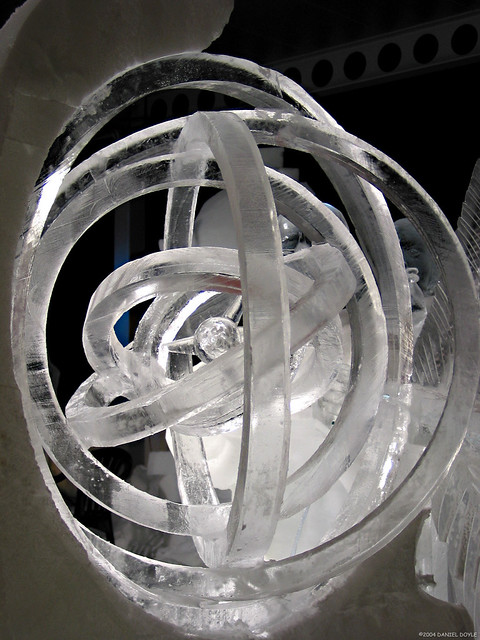
Water feels abundant. Seas and oceans surround this island, while rivers and lakes run through its landscapes. Water flows through our bodies, nourishes the food we eat and sustains the plants and animals around us.
And yet water is finite. It is precious.
Through these sculptures, we invite people to see water differently: not as an endless resource at our disposal, but as something to be treasured.
As the ice melts before our eyes, the sculptures offer us a moment to pause and reflect on the beauty and fragility of this life-giving element. Where did this water come from? Where will it go next? These questions apply not only to the water released from the sculptures, but also to the water that surrounds us, sustains us and flows within us.
These works encourage us to consider the true value of water and our shared responsibility to care for it. Protecting water means protecting the ecosystems, communities and forms of life that depend upon it.
The sculptures connect with the theme for Science Week, Water: from molecule to ocean.
This theme invites us all to reconsider something so familiar that we can easily take it for granted. Water is much more than something we drink when we’re thirsty or complain about during bouts of bad weather. It is essential for biodiversity, as well as our health, wellbeing and nourishment. It is also at the heart of some of the most pressing challenges facing our world, from access to clean water and climate change to protecting the natural habitats that depend on it.
By capturing water briefly in its solid form before allowing it to change state and move on, the sculptures bring the journey of water to life. They remind us that water is always changing, circulating and connecting the smallest building blocks of life with the largest systems on our planet.
Each sculpture represents a different connection between water and life: human life, plant life and marine life. Research, past and present, has helped us to better understand these relationships and the vital role water plays in sustaining life. Today, Research Ireland continues to support research exploring many of these questions.
The first sculpture focuses on something fundamental: our dependence on water for life and health. While water sustains us all, access to the water needed for good health can’t be taken for granted. Research has an important role to play in addressing this challenge. Researchers at RCSI are part of the international SURG-Water team, working with partners in Malawi to improve access to safe, clean water in rural healthcare facilities. The team has developed a solar UV-based water treatment technology to support maternal health facilities, demonstrating just how closely water and human health are connected. Read more about the SURG-Water research here.
The second sculpture highlights the essential role water plays in plant life. This relationship is vital not only to healthy ecosystems, but to us too, through the food we grow and eat. The ResilientCrop project, led by Dr Rossana Henriques at UCC, is exploring how climate change, including periods of prolonged drought, affects perennial ryegrass and white clover, two important forage crops in Ireland. By investigating what makes these crops more resilient to changing conditions, the research is helping us to better understand how plant life can respond to the challenges of a changing climate. Learn more about the ResilientCrop project here.
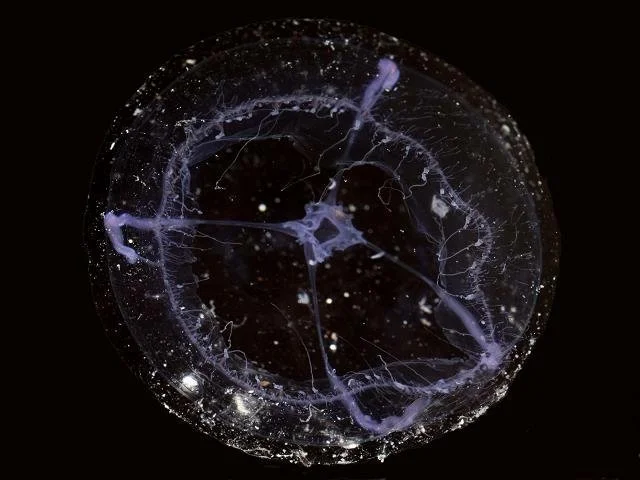
The third sculpture highlights the fascinating forms of life found beneath the surface of our waters. The compass jellyfish has a special connection to the history of marine research in Ireland. More than a century ago, self-taught marine biologist Maude Delap made groundbreaking observations of jellyfish from her home on Valentia Island, County Kerry. She became the first person in the world to document and publish the full process of rearing jellyfish in an aquarium, helping to build our understanding of the marine life found in Irish waters, of which there is still much to discover. Read more about Maude Delap and her work here.
Together, the sculptures and the research they connect to invite us to consider the many ways that water sustains life, from our own health and the plants we depend on to the complex ecosystems of our rivers, wetlands and oceans. Research helps us to better understand these connections, the challenges they face and how we can protect this precious resource for the future.
Daniel Doyle has more than 20 years’ experience creating ephemeral artworks from sand, snow and ice. Although his sculptures exist only for a short time, they are designed to leave a lasting impression on us.
Read more about Sculptor and Maker Daniel Doyle and Fleeting Sculpture here.