Published in Blog - 8 min read - Sep 10, 2026
From the depths of the Atlantic Ocean to Ireland’s rivers and lakes, water shapes our environment, economy and way of life. It sustains biodiversity, supports coastal and inland communities, and plays a crucial role in climate regulation. As development accelerates and environmental pressures grow, understanding precious marine and freshwater ecosystems and the ways they are changing is vital for Ireland’s prosperity.
The Marine Institute, Ireland’s national agency for marine research, technology development and innovation, plays a central role in this effort. Through scientific research, monitoring programmes and advisory services, the Institute supports the sustainable development of Ireland’s maritime resources while providing the evidence needed for informed environmental policy and decision-making.
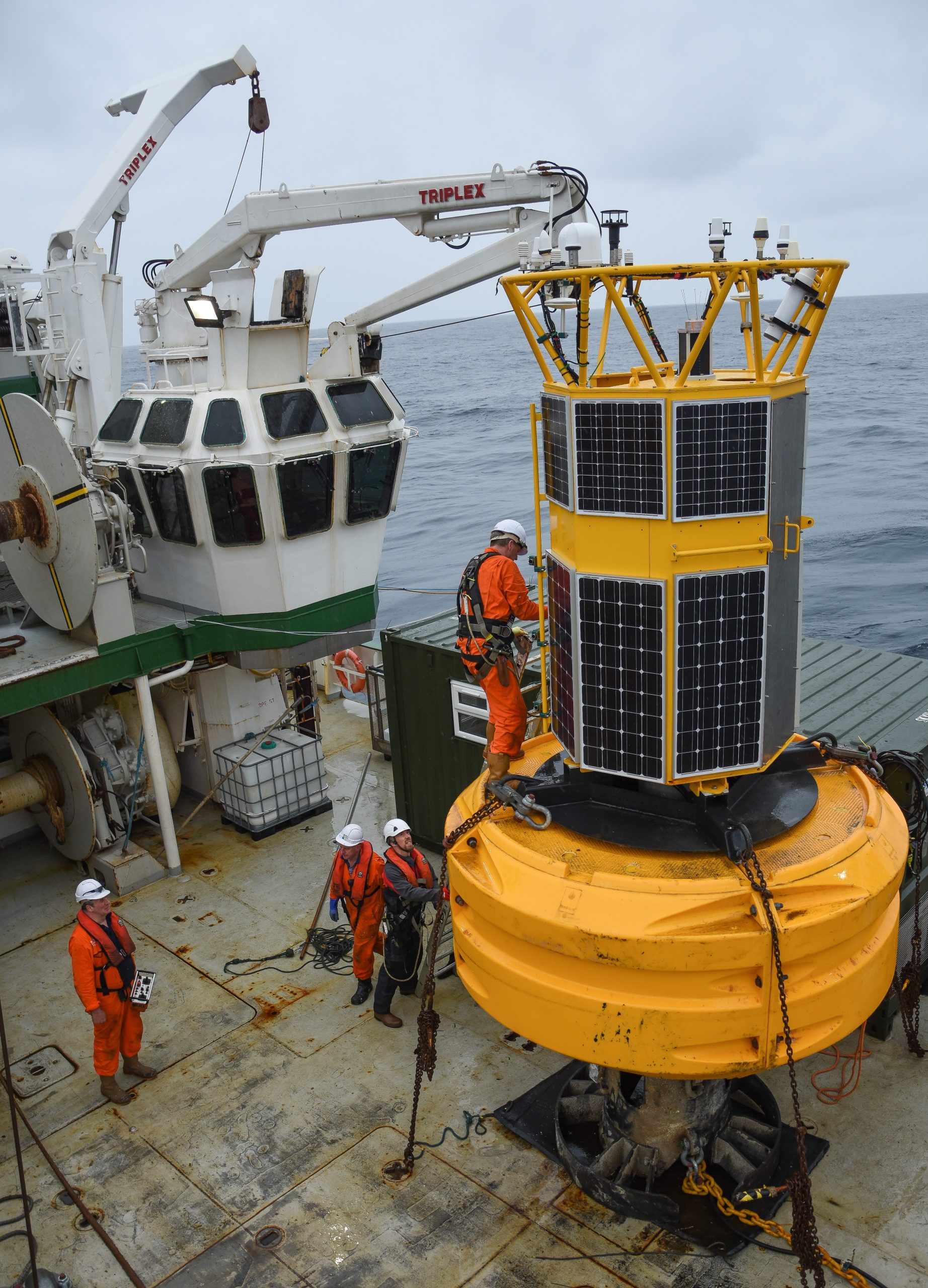
One of the Marine Institute’s most important areas of work is ocean observation and long-term environmental monitoring. These programmes provide critical data for weather forecasting, support fisheries management, and help scientists understand how Ireland’s marine and freshwater ecosystems are responding to a changing climate. Photos by Tomas Szumski.
One of the Marine Institute’s most important areas of work is ocean observation and long-term environmental monitoring. These programmes provide critical data for weather forecasting, support fisheries management, and help scientists understand how Ireland’s marine and freshwater ecosystems are responding to a changing climate. A flagship example is the Institute’s Sentinel Site Network, which tracks key environmental indicators in Ireland’s coastal waters.
Located at Mace Head and Lehanagh Pool in Co. Galway, and more recently at Lough Furnace in Co. Mayo, these monitoring stations continuously measure physical, chemical and biological conditions in the water. Scientists monitor everything from temperature, oxygen levels and nutrient concentrations to carbon cycling, plankton activity and water movement. These observations provide a real-time picture of ecosystem health and help identify both gradual environmental changes and sudden events that could affect marine life.
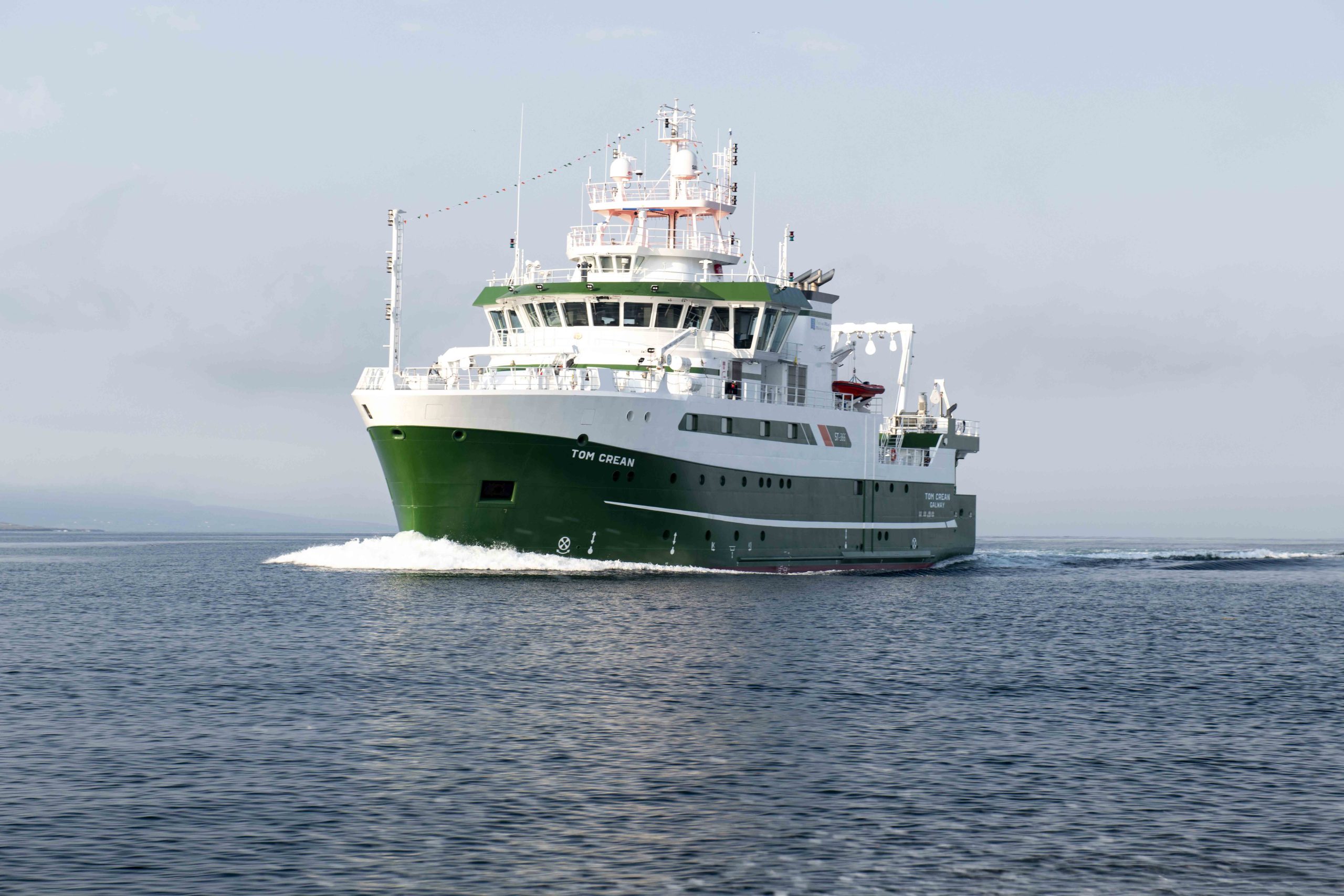
The data generated by these sites, together with information collected through the Marine Institute’s wider national observing infrastructure, including the research vessels RV Tom Crean and RV Celtic Explorer, is increasingly important as climate change alters ocean conditions around Ireland. Analysis published in the Marine Institute’s Stock Book 2025 highlights how rising sea temperatures can affect plankton blooms, which form the foundation of marine food webs. Changes in the timing and distribution of these microscopic organisms can have far-reaching consequences for fish populations, biodiversity and food security.
The Marine Institute’s research vessels serve as state-of-the-art mobile laboratories and strategic national assets, collecting the scientific evidence needed to support national and European policy decisions and ensure that fisheries management is based on robust, independent science.
 As the Marine Institute continues to generate the knowledge needed to protect Ireland’s waters in a rapidly changing world, we hope that Science Week encourages greater understanding of the challenges facing our marine and freshwater environments, while inspiring people of all ages to engage with science,
RV Tom Crean is the primary offshore vessel used by Ireland’s seabed mapping programme, INFOMAR (Integrated Mapping for the Sustainable Development of Ireland’s Marine Resource). The programme maps the physical, chemical and biological features of Ireland’s seabed and provides high-resolution information to support: Sustainable fisheries management, Marine Protected Area (MPA) designation and management, Offshore Renewable Energy (ORE) development, and Marine Spatial Planning.
The Marine Institute has also developed one of the most valuable long-term environmental datasets in Europe and has become internationally recognised for its fisheries, freshwater ecology and climate research.
Since 1970, scientists at the Newport facility have maintained a continuous census of salmon, sea trout and eel populations through a unique trap system that records fish migrating both upstream and downstream. These long-term records provide invaluable insights into how fish populations respond to environmental change and human pressures, supporting national and international fisheries management.
The facility also hosts a captive breeding conservation programme for one of Ireland’s most endangered freshwater species: the freshwater pearl mussel. Working with the National Parks and Wildlife Service, Marine Institute scientists achieved a breakthrough when viable juvenile mussels were successfully bred, offering new opportunities for conservation and future reintroduction into river habitats. The programme demonstrates how scientific research can contribute directly to nature restoration while raising awareness of the importance of healthy freshwater ecosystems.
Science Week provides an important opportunity to share these stories with the public, connecting people with the research and innovation that inform environmental decisions and help protect our natural heritage.
For more information, visit: marine.ie