The Sustainable Water Network (SWAN) uses scientific research to develop policy positions on issues affecting our waters and then advocate at the national and EU level for the protection of nature, ecosystems and biodiversity.
One recent example of SWAN using policy backed by science is last year when SWAN published an evidence-based policy position on Aquaculture in Ireland, which referenced studies and reports from Ireland and around the world on the environmental implications of aquaculture and then used this evidence to develop 10 recommendations.
Science Week is the perfect opportunity to take action for water quality! SWAN regularly shares opportunities for the public to help advocate for water and nature. Based on our science-backed aquaculture work, our top recommendation is to phase out open-net salmon-farming, and we currently have an online petition to sign.
Ireland’s salmon are an important part of our culture- from an Bradán Feasa (the salmon of knowledge) in folklore, to the old ten pence coin, to the new passport pages, to the top of St Anne’s church in Cork, and many a pub motif.

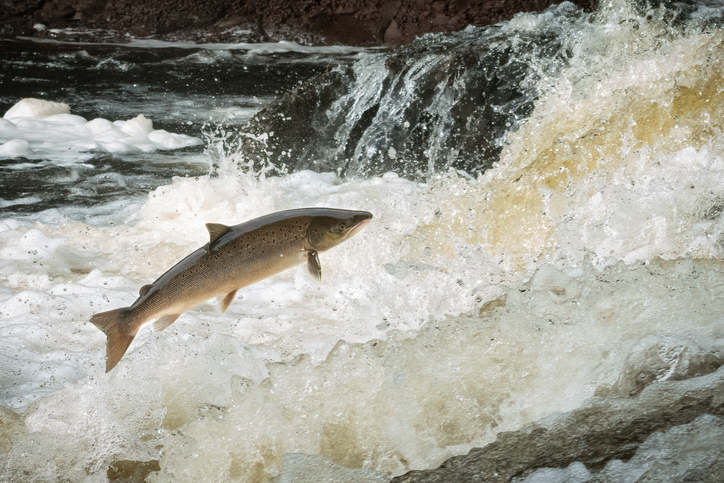
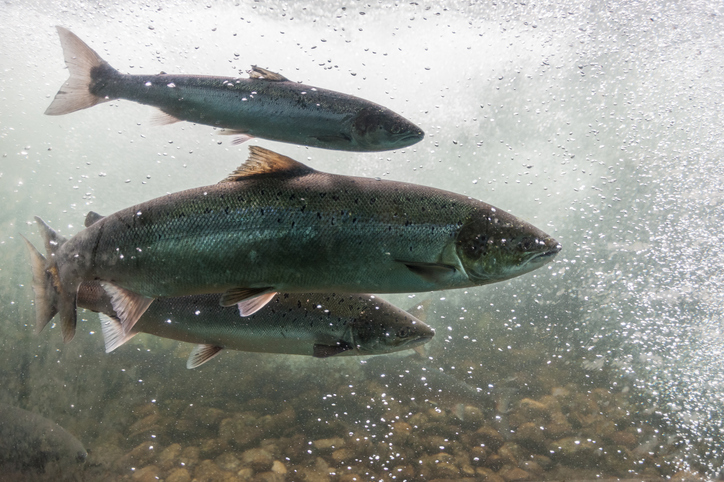
Atlantic salmon (Salmo salar) are anadromous, which means they are born in freshwater rivers, migrate to sea as adults, and then return to the rivers in which they were born to spawn (unlike European eels, which are catadromous- they live as adults in freshwater, but spawn in salt water). They are a majestic fish which make epic migrations- scientific tagging has shown Irish salmon swimming to Greenland and back!
Ireland’s salmon are an important part of our culture- from an Bradán Feasa (the salmon of knowledge) in folklore, to the old ten pence coin, to the new passport pages, to the top of St Anne’s church in Cork, and many a pub motif. The salmon seems to be everywhere- everywhere but swimming in our rivers. Ireland’s wild salmon population has declined by a shocking 90% since the 1970s. Several factors have led to this tragic decline, however numerous long-term studies have shown salmon farms to be a key pressure on wild salmon and sea trout. Several factors have led to this tragic decline, however numerous long-term studies have shown salmon farms to be a key pressure on wild salmon and sea trout.
The Irish salmon available for consumption is all labelled organic – and it’s all farmed in open-net sea pens. These pens allow fish faeces and uneaten food to enter the surrounding waters and pollute the ecosystem. Despite the organic labelling, farmed Irish salmon are treated with antibiotics and pesticides, and nets are treated with chemicals – all of which enters the sea (Fernandes, McWhinnie & Tett, 2011). Salmon are carnivorous, so the “need for feed” in farms perpetuates issues of overfishing at sea, including of sprat, an important food source for whales and seabirds around the Irish coast.
Worse still for our native salmon is the effect of sea lice. They are a parasite which causes physical injury to fish, leading to physiological problems and death (Gargan, Shephard & MacIntyre, 2017). Lice from farm origin are a main source of infection in wild salmon (Jansen et al., 2012) and can cause a sizeable reduction in the runs of wild Atlantic salmon. Research published in May 2025 reports that “between the early 1980s and 2023, numbers of wild Atlantic salmon fell by more than half prior to any fishing taking place, and the reported catch of wild Atlantic salmon in 2023 was the lowest in the time series since 1960” (Gargan, 2025). Another study using 26 years of data to examine the effect of sea lice from salmon farming in Killary Harbour on the return of wild Atlantic salmon to the River Erriff (County Mayo) found that returns of wild adult salmon could be reduced by over 50% in years following high lice levels in the nearby salmon farms (Shephard & Gargan, 2017).
Another recent study from the Marine Institute found that approximately one-third of sampled wild Irish Atlantic salmon nationwide had mixed genetics from farmed salmon. Since the 1980s, millions of farmed Atlantic salmon have escaped into the wild (Solberg et al., 2016). These escapees can have serious impacts on wild populations, leading to gene mixing. A 37-year study of wild and open-net farmed Atlantic salmon found that salmon escapees can reduce breeding and affect the ability of native populations to adapt to water temperatures, leading to potential extinction of wild populations within 20 generations (McGinnity et al., 2009). The escapees are liable to transfer disease and parasites (including sea lice and pancreas disease), interfere with wild salmon breeding, genetically alter native populations, and compete with wild populations for food (Jensen et al., 2010).
Fish tagging, lice studies, water quality monitoring and gene testing are all types of the necessary scientific research which we need to understand the pressures affecting wild salmon and then use to form policy positions and advocate for the protection of our wild salmon. The more we know about how farmed salmon around the Irish coasts affect our wild Atlantic salmon and marine ecosystems, the more information we can bring to decision-makers to help protect nature. Science Week is an excellent opportunity to give the public an understanding of the science behind water-related policy positions, the need for more science in this area, and then for the public to take action on the back of this science-based policy to ensure decision-makers act on this evidence. Take action and sign the SWAN petition!
For more information, visit swanireland.ie