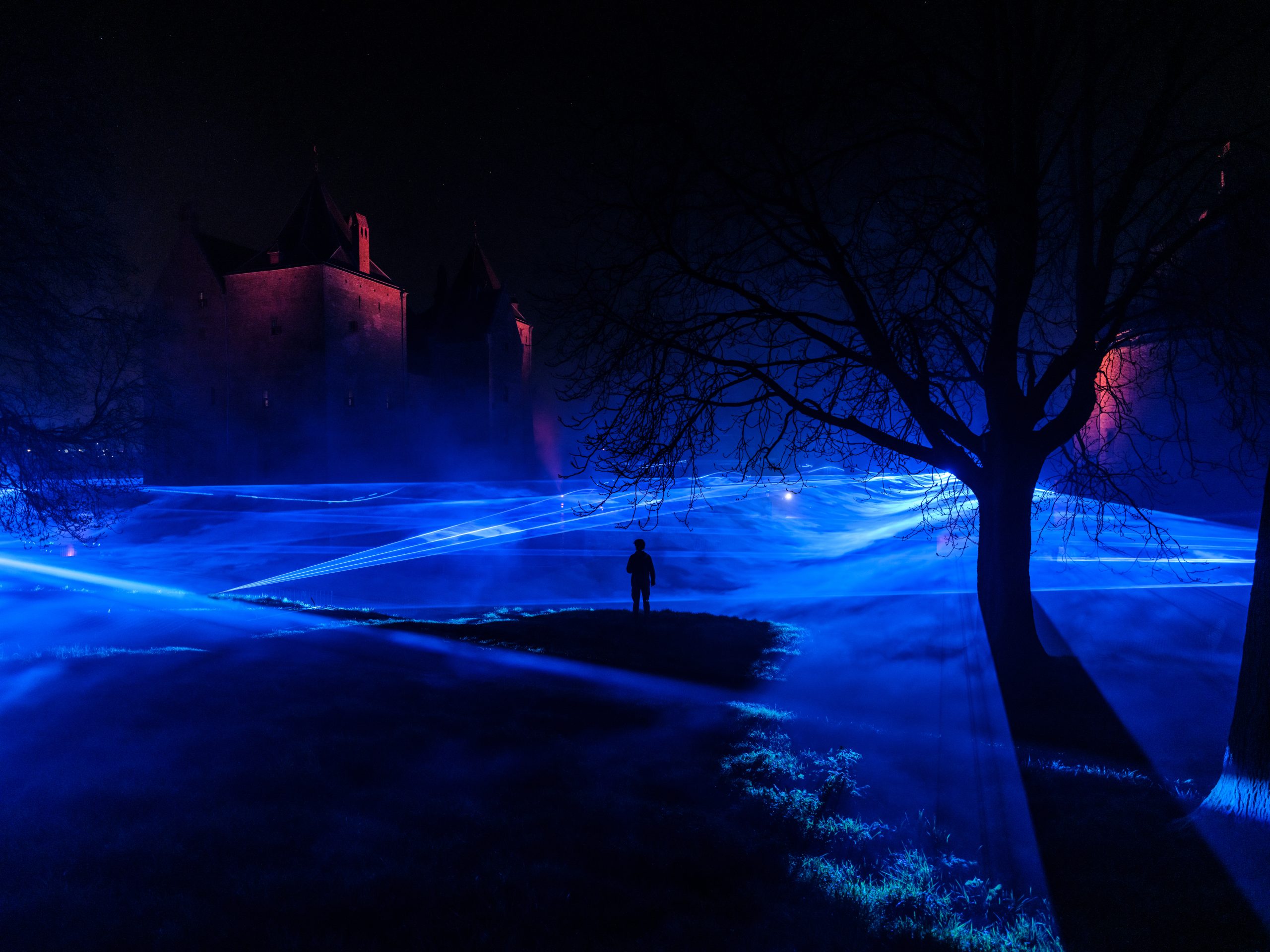
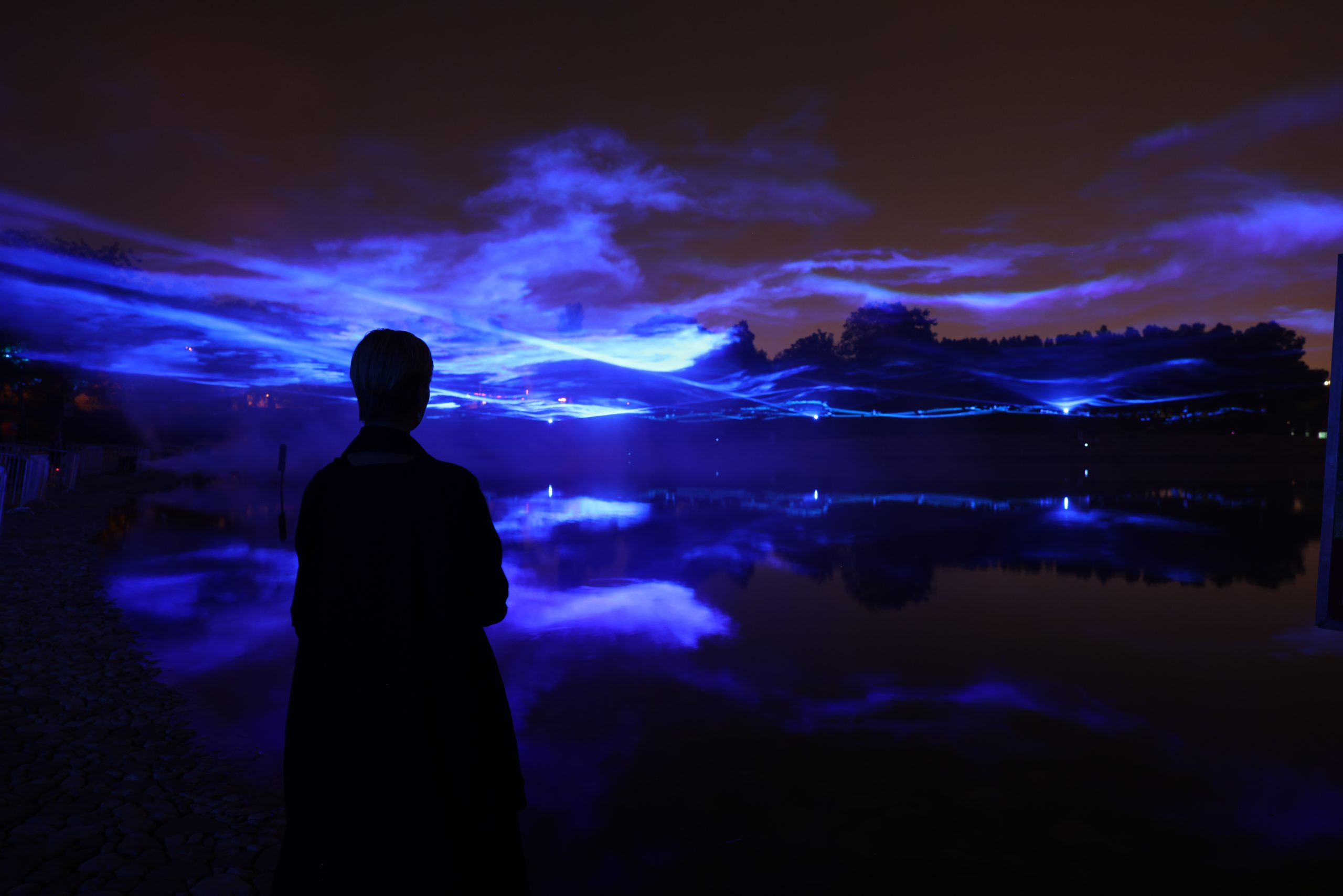
Created by Dutch artist and innovator Daan Roosegaarde, WATERLICHT uses LEDs and lenses to create a virtual flood, illustrating how high water levels could rise. It is designed to remind us of the importance of water innovation and the impact of climate change.
As waves of blue light move above us, we have the opportunity to imagine a future shaped by the power of water. The experience also gives us a moment to reflect on our own vulnerability as water levels rise and consider the important role innovation can play in helping us adapt to a changing climate.
Water has always shaped the world around us, from our landscapes to our communities. However, our relationship with water is changing. WATERLICHT asks us to imagine what rising water could mean for the places we know. By transforming the familiar landscape of Iveagh Gardens into a virtual flood, it makes something that can sometimes feel abstract or distant suddenly feel much closer to home.
It also asks us to look ahead. How can we better understand our changing relationship with water? How can we prepare and adapt? What role can research and innovation play in helping us respond?
WATERLICHT speaks directly to this year’s Science Week theme, Water: from molecule to ocean. This theme invites us to explore water at every scale, from something fundamental to life to a powerful force that shapes our landscapes, climate and communities.
WATERLICHT brings this power into focus. Standing beneath a virtual flood encourages us to consider not only the forces shaping the world around us, but how our understanding of water can help us respond to change and prepare for the future.
Questions raised by WATERLICHT are being explored through research supported by Research Ireland. From modelling changes in sea levels to developing new approaches to flood forecasting and climate adaptation, research is giving us new ways to explore what a future shaped by water could mean.
Research supported through the Co-Centre for Climate + Biodiversity + Water, co-funded by Research Ireland, is helping us understand how climate change will affect sea levels around Ireland. Multiple factors related to climate change, including continued rises in global temperature, will affect sea level change in Ireland, and across the world. Through programmes like Rising Issues different possibilities for sea-level rise are explored together with communities, helping us to consider how our coastlines may change over time.
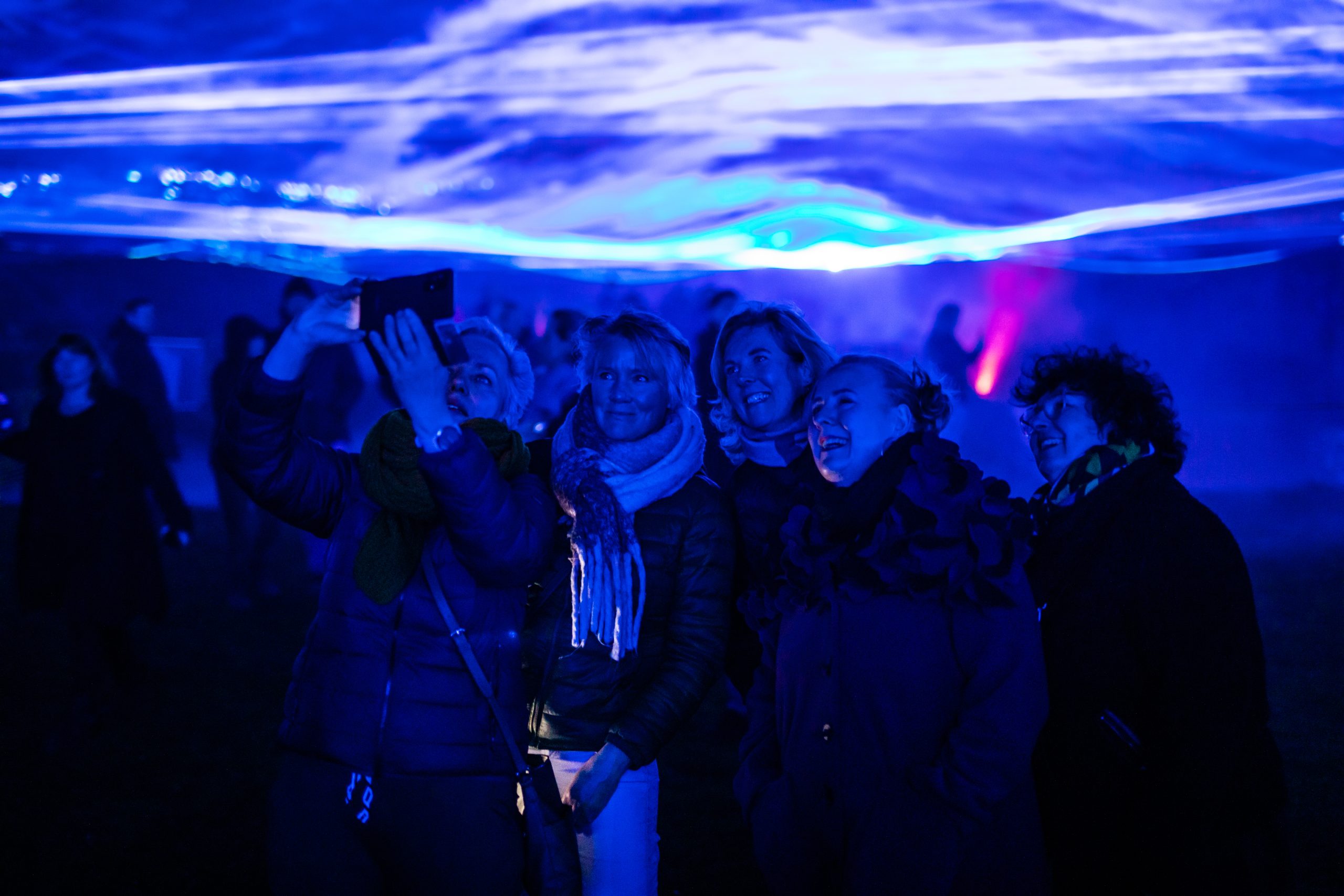
Research and projections can turn changes that take place over many years into knowledge we can use today, giving communities a clearer picture of what may lie ahead and supporting informed choices about how we prepare and adapt.
The dataset below created for Climate + Rising Issues, shows sea-level projections for different parts of Ireland between now and 2150, relative to the 1981-2000 average, including tide gauge observations for Dublin. These projections will help us understand how climate change could impact Irish coastlines. Learn more about this research here.
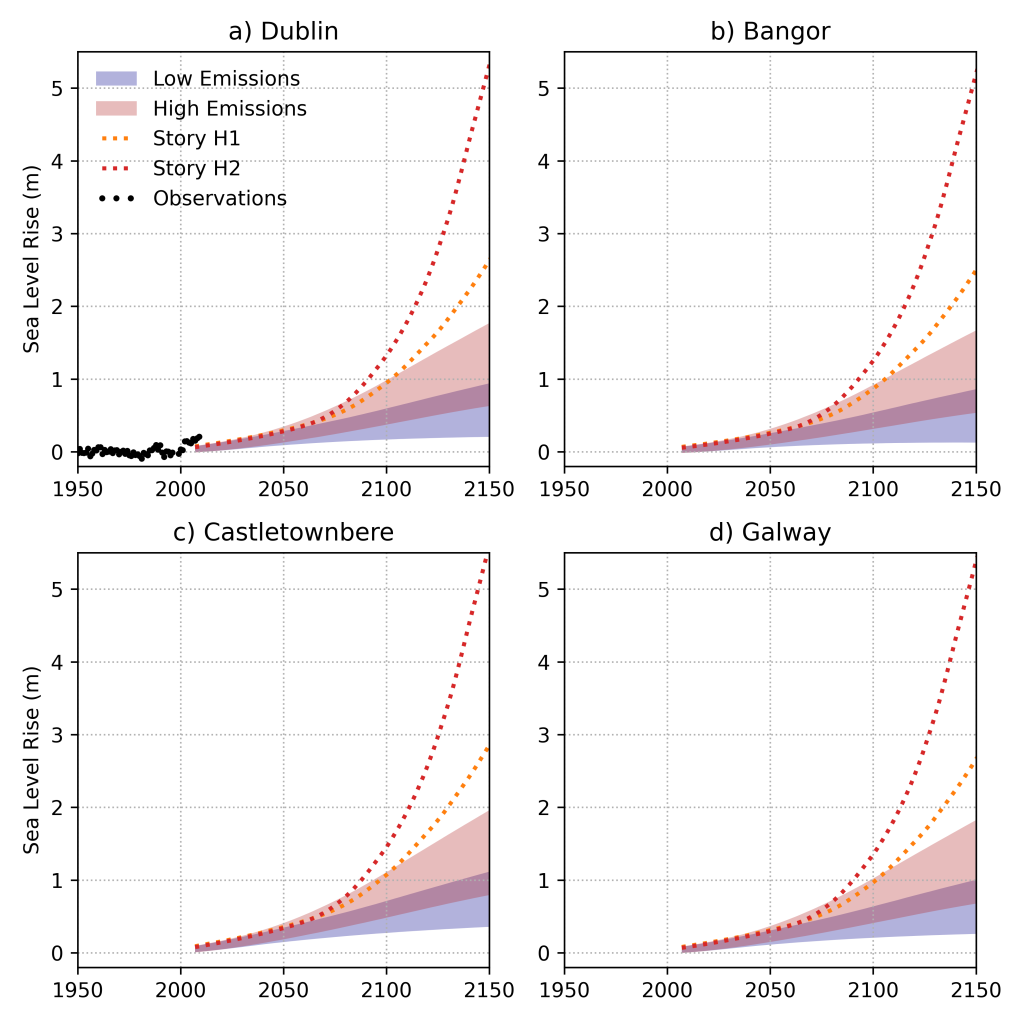
Sea-level projections for different parts of Ireland between now and 2150 relative to the 1981-2000 average following Palmer et al (2018; 2024) including tide gauge observations for Dublin from psmsl.org. These projections will help us understand how climate change could impact Irish coastlines.
Understanding the risk is one part of the challenge. Research can also help us to better anticipate when flooding may happen.
StopFloods4.ie, led by researchers at the University of Galway, is investigating the development of a new flood forecasting system for coastal and river flooding in Ireland. The research combines approaches including hydrodynamic modelling, machine learning and artificial intelligence and aims to help us better understand and manage flood risks. Read more about this research here.
WATERLICHT asks us to imagine what a future shaped by rising water might look like. However, these future changes are more than just the physical landscape: they will also affect the people who live, work and have built their lives here.
Research can help us understand the human side of climate adaptation, including how environmental change affects communities and how people can prepare, respond and build resilience. By understanding these experiences alongside the physical changes taking place, we can think more broadly about what successful adaptation might look like.
WATERLICHT gives us the opportunity to experience an imagined future through art. Research gives us another perspective, helping us understand what lies ahead and giving us knowledge and tools to respond.
Together, art and research invite us to think differently about our relationship with water: not only to consider the challenges ahead, but to recognise our ability to prepare, adapt and help shape what comes next.
Daan Roosegaarde’s work explores the relationship between people, technology and the world around us. He founded Studio Roosegaarde in 2007, working with a team to create innovative landscapes that encourage people to imagine and experience possible futures.